 Outdoor UPS Cabinet Corrosion Protection: What Should Coastal Sites Specify?
Nov 10, 2026
Introduction
Coastal deployment for outdoor UPS cabinets brings unique environmental challenges: salt‑laden sea wind, high humidity, chloride deposition and UV radiation can gradually erode cabinet shells, fasteners, sealing seams and internal power components. Many project engineers mistakenly believe a high‑level IP rating is sufficient for coastal anti‑corrosion. However, IP rating only measures dust‑water ingress protection, and cannot replace corrosion‑resistant material, surface finishing and verification testing. Without proper specifications, premature rust, paint peeling and cabinet failure will cause costly downtime for telecom base stations, port automation, coastal data sites and seaside industrial facilities.
When you source outdoor UPS systems for coastal sites, what exact anti‑corrosion requirements should you write into your technical specification sheet? This article breaks down core specification points and introduces CONSNANT outdoor UPS cabinet proven for harsh seaside environments.
Key Specification Items for Coastal Outdoor UPS Cabinets
1. Cabinet Base Material Selection
Chloride ions from sea salt are the primary driver of coastal cabinet corrosion. Different base metals deliver huge performance gaps:
Galvanized cold‑rolled steel: Cost‑effective for inland outdoor sites; for coastal use, must match high‑performance duplex anti‑corrosion coating system, otherwise rust will emerge quickly.
304 stainless steel: Suitable for mild coastal areas far from shoreline. Not recommended for sites within several kilometers of coastline, as chloride may trigger pitting corrosion over time.
316 /316L stainless steel: Preferred material for high‑salinity coastal and near‑shore locations. Molybdenum ingredient enhances resistance against chloride‑induced corrosion.
CONSNANT outdoor UPS & telecom power cabinets support customizable cabinet material: galvanized steel with heavy‑duty anti‑corrosion spray, optional 304 / 316 stainless‑steel shell for coastal and marine‑grade projects.
2. Surface Coating & Treatment Standards
Material alone cannot guarantee long‑term anti‑corrosion. Surface finishing must be clearly specified in procurement documents:
Pre‑treatment: Complete degreasing, phosphating and passivation before spraying.
Outdoor‑grade powder coating / duplex coating system; define dry film thickness requirement.
Weld seams, sharp edges and cut corners need full coverage; these positions are typical corrosion weak‑points.
CONSNANT coastal‑targeted cabinets adopt galvanized substrate plus professional outdoor anti‑corrosion spraying process, completed strict salt‑spray ageing test. Real‑world coastal project cases verify no obvious rust after multi‑year field running.
3. Hardware, Fastener & Galvanic Corrosion Prevention
Many corrosion failures occur not on main cabinet panels but on screws, hinges, lock assemblies and cable glands:
All exposed fasteners shall adopt stainless‑steel hardware (316 recommended for severe coastal sites).
Avoid direct contact between dissimilar metals to prevent galvanic corrosion under damp salt‑air atmosphere.
Double‑layer EPDM weather‑resistant sealing gasket; ordinary rubber will age and crack quickly under coastal UV & salt fog.
4. Protection Grade, Thermal Management & Cabinet Structure
Important reminder: IP55 / IP56 dust‑water protection ≠ anti‑corrosion performance, but it is a necessary foundation for coastal cabinet reliability.
Specify requirements below:
Minimum enclosure rating: IP55 or IP56, preventing salt‑mist, rain and dust entering cabinet interior.
Internal temperature control: optional cabinet air‑conditioner or heater module, avoid high‑humidity condensation inside accelerating electronic part corrosion.
Reasonable drainage design: drain holes for condensed moisture inside cabinet.
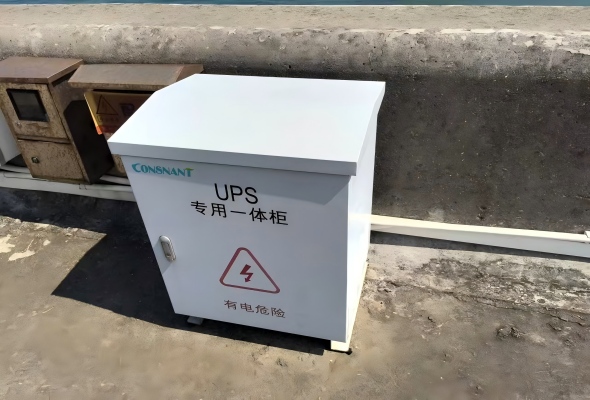
CONSNANT Outdoor UPS Cabinet series reaches IP55 / IP56 protection level. Integrated thermal management including cabinet air‑conditioning, heating and heat dissipation fan modules, supporting ground‑mount, pole‑mount and wall‑mount installation for seaside base stations and coastal industrial sites.
H3|5. Mandatory Test & Certification Requirements
Add these test clauses into technical tender documents:
Neutral Salt Spray Test (NSS): Define testing hours according to coastal corrosivity grade (reference ISO 12944 corrosion class C4 / C5 for coastal environment).
Request supplier provide third‑party salt‑spray test report for cabinet assembly, not only raw‑material certificate.
Verify product certificates including CE, ISO 9001, ISO 14001, ISO 45001 quality‑environment‑occupational‑health management system certifications.
H2|CONSNANT Outdoor UPS Solution for Coastal Harsh Sites
As a China‑based manufacturer specialized in outdoor UPS, telecom power cabinet and energy‑storage power solution, CONSNANT delivers fully customized outdoor power system for coastal telecommunication base station, port, coastal power station and seaside industrial projects.
Core highlights for coastal projects:
Flexible cabinet material options: galvanized steel with heavy‑duty anti‑corrosion coating, upgradeable to 304 /316 stainless steel enclosure.
IP55 / IP56 sealing cabinet, double‑layer weather‑resistant sealing structure, passed salt‑spray ageing verification from lab and real‑site coastal deployment.
All‑in‑one integration: UPS host, lithium‑ion / lead‑acid battery bank, PDU distribution, intelligent temperature control and SNMP remote monitoring inside single cabinet, adapting unmanned coastal site operation.
Full certification portfolio: CE, ISO series certification, supporting overseas project bidding requirements.
Custom service: adjust cabinet dimension, cooling configuration, anti‑corrosion grade according to local coastal salinity, temperature and site layout.
FAQ
Q1: If a cabinet is IP56‑rated, does it mean it will resist coastal salt‑fog corrosion? A: No. IP rating describes protection against water jet and dust. Corrosion resistance depends on substrate material, coating, fastener material and salt‑spray test performance. High IP grade cannot replace anti‑corrosion specification work.
Q2: 304 vs 316 stainless steel: which one to pick for coastal sites? A: 304 stainless steel works for mildly‑coastal zones far away from surf. For locations within several kilometers of seashore with heavy salt‑spray exposure, specify 316 / 316L stainless‑steel cabinet and hardware for long service life.
Q3: What typical applications require anti‑corrosion outdoor UPS cabinets in coastal regions? A: Coastal 5G telecom base station, port monitoring & automation system, seaside wind‑solar hybrid station, coastal substation auxiliary power, coastal highway monitoring equipment, offshore island backup power system.
Conclusion
Coastal site outdoor UPS cabinet anti‑corrosion is a system engineering covering material selection, surface treatment, hardware matching, structural design and laboratory verification test. Relying only on IP grade or supplier verbal promises creates hidden operational risks. Project buyers should clearly write material grade, coating specification, fastener requirement and salt‑spray test criteria into technical specifications.
CONSNANT provides one‑stop customized outdoor UPS cabinet & power system for coastal harsh‑environment projects. Visit our outdoor UPS solution page: https://www.consnant.com/outdoor‑ups‑solutions or email sales@consnant.com for detailed technical proposal.





 Sign Up To Our Newsletters

 IPv6 network supported