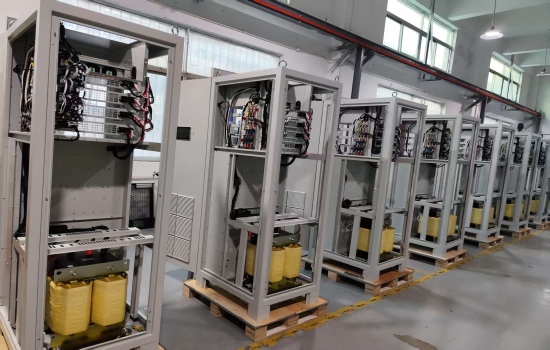
 Replacing an Industrial UPS: What Information Should a Plant Gather Before Selecting a Replacement?
Oct 28, 2026
For manufacturing plants, chemical facilities, water treatment sites and process automation workshops, the industrial UPS protects mission-critical loads: DCS control systems, PLC hosts, sensors, safety interlock devices and monitoring instruments. An aging UPS faces rising failure risk, spare part shortages and low efficiency. Rushing into replacement without a complete data survey often leads to mismatched capacity, incompatible wiring, insufficient backup runtime or expensive rework.
Before selecting a replacement industrial online UPS, maintenance and electrical teams must collect structured site data. This checklist helps you define requirements clearly and select a reliable industrial UPS solution such as Consnant CNG low-frequency industrial UPS and CNH high-frequency industrial UPS series.
1. Existing UPS & Load Profile Data
Start by auditing the current UPS and real load conditions, not only the nameplate values.
Old UPS model, rated kVA/kW, output power factor, phase configuration (3/3, 3/1, 1/1), topology (online double conversion)
Actual measured load (not just nameplate sum): steady-state load, inrush current from motors, periodic surge load
Critical load list: DCS, PLC, emergency instruments, SCADA, actuators; separate non-critical loads that can be removed from the UPS bus
Load tolerance: voltage sag tolerance, harmonic sensitivity, whether zero transfer time is mandatory
Future expansion margin: 20%–30% spare capacity is recommended for new production lines or additional control cabinets
Consnant industrial UPS supports output power factor 1.0, which delivers more real power for modern switching power loads common in automation control rooms. The CNG330 low-frequency industrial UPS is designed to withstand heavy inrush and short-circuit events typical of factory environments.
2. Grid & Electrical Interface Information
Industrial sites usually suffer unstable grids: voltage flicker, frequent sags, harmonics and phase imbalance. These parameters decide the acceptable input window, rectifier type and harmonic requirements.
Nominal voltage: 380/400/415VAC, 220/230VAC; actual long-term measured input voltage range
Frequency range, grid THDi, harmonic source location (VFD, welding machines)
Input and output wiring: cable size, existing bypass path, maintenance bypass, single-line diagram
Protection coordination: upstream MCCB rating, earth fault scheme, short-circuit capacity at the power room
Local compliance standards: IEC 62040, CE, ISO and site internal electrical codes
Consnant high-frequency CNH series adopts ultra-wide input voltage range, which reduces battery discharge frequency and extends battery life for sites with poor grid quality. The 12-pulse rectifier option suppresses low-order harmonics for harmonic-sensitive process plants.
3. Backup Runtime & Battery System Requirements
Battery is the biggest variable in industrial UPS TCO. Do not default to the old runtime.
Required backup time: short ride-through (5–15 min) for orderly shutdown; long runtime (30 min to several hours) for continuous process
Battery type compatibility: lead-acid VRLA or LiFePO4 lithium battery
Existing battery cabinet size, DC voltage, charging current limits
Battery environment: temperature, ventilation, fire control rules, battery recycling requirements
Recharge time target after outage
Consnant’s intelligent battery management system automatically switches float charge and equalized charge, slowing battery aging and extending battery service life by over 40%. External battery cabinets can be configured flexibly to meet customized backup duration.
4. Physical Site & Environmental Constraints
Many UPS retrofit projects fail because engineers only check drawings instead of the real room conditions.
UPS room dimensions, floor load capacity, door width, lifting path, elevator limits
Ambient temperature, humidity, dust, corrosive gas, condensation risk; IP protection requirement
Heat dissipation: air conditioning capacity, ventilation route, noise limit for control building
Installation footprint: traditional tower or compact rack/modular layout
Working window for replacement: whether live cutover is needed to avoid production stop
5. Communication, Monitoring & Maintenance Specifications
Modern industrial UPS must integrate into plant SCADA and centralized monitoring platforms.
Required communication protocols: Modbus-RTU, Modbus-TCP, SNMP, dry contact alarm
Remote monitoring platform, local HMI display requirement, fault alarm notification method
Maintenance access: front service, hot-swap module, online parallel expansion capability
Service expectation: local after-sales support, spare parts lead time, preventive maintenance plan
Consnant industrial UPS supports standard industrial communication interfaces and parallel redundancy. Multiple units can run in parallel for N+1 redundancy, enabling online capacity expansion without shutting down critical control systemsMade-in-Ch....
6. Budget, TCO & Cutover Risk Plan
Capital budget and long-term TCO comparison: efficiency loss of old UPS, battery replacement cycle, maintenance cost
Cutover strategy: hot swap, temporary bypass UPS, scheduled shutdown window
Disposal plan for old UPS and waste batteries following local environmental regulations
Matching Consnant Industrial UPS Series After Data Collection
After you gather all the above information, you can match the correct product family:
CNG Low Frequency Industrial Online UPS: for heavy industry, harsh grid, high overload, DCS/boiler/chemical control systems
CNH High Frequency Industrial Online UPS: compact footprint, high efficiency, for automation workshops, intelligent factory control rooms
Modular UPS: for phased expansion, N+1 redundant power rooms, data and central control centers
Final Tips for Plant Teams
UPS replacement is not a simple “same-for-same swap”. Old units may be oversized or undersized for today’s load profile. A complete site survey report allows your UPS supplier like Consnant to provide an optimized quotation, correct cabinet layout and safe cutover scheme.
FAQ
Q1: Can I directly replace the industrial UPS with the same kVA as the old one?
A1: Not recommended. You need to measure the real running load, check power factor and add expansion margin. The old UPS may run at low load with poor efficiency or be overloaded by newly added control equipment.
Q2: What is the advantage of low-frequency industrial UPS for process plants?
A2: Low-frequency UPS has stronger overload and short-circuit tolerance, better anti-interference performance, suitable for sites with motor loads and frequent grid disturbances.
Q3: Does Consnant industrial UPS support lithium battery?
A3: Yes. Consnant industrial online UPS is compatible with lead-acid and LiFePO4 batteries, with adjustable charging curves for different battery chemistries.




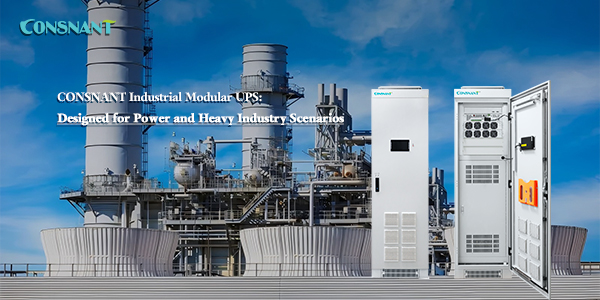 CONSNANT Industrial Modular UPS: Designed for Power and Heavy Industry Scenarios
Mar 05, 2026
 Sign Up To Our Newsletters

 IPv6 network supported